Wrinkling of Vinyl Pool Liners in Pools with Automatic Covers
SWIMMINGLY by i2M TECHNICAL BULLETIN 004 | VER 001
Expert Resources for the Vinyl Pool Liner Industry
EXECUTIVE SUMMARY
Vinyl pool liners are trusted for their durability, design versatility, and long service life when properly maintained. In pools equipped with automatic safety covers, there are some additional care considerations that help ensure the liner continues to perform as intended.
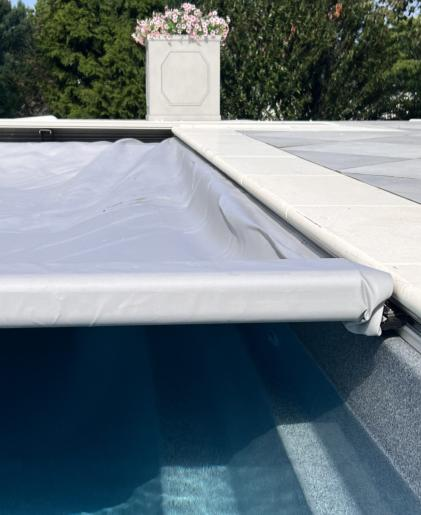
When automatic covers are left closed for extended periods, especially after chemical additions, a microenvironment can form under the cover, concentrating heat and sanitizers in a way that may lead to vinyl swelling and the development of surface wrinkles, most often in wall or transition areas.
This bulletin outlines why this effect can happen, what it looks like, and how to prevent it using established best practices for chemical management and cover operation. This information is designed to support pool owners, builders, and service professionals in protecting the long-term integrity and appearance of vinyl liners.
WHY WRINKLING OCCURS UNDER AUTOMATIC COVERS
1. Water Absorption and Vinyl Expansion
Vinyl liners naturally absorb a small amount of water. However, under high sanitizer or low pH conditions, the rate of absorption increases significantly, especially when chemicals are trapped and not dispersed. This causes:
• Dimensional growth in the vinyl
• Loss of tension against the pool shell
• Formation of wrinkles, especially where water pressure or friction is lower (e.g., walls, corners)
This is not a material failure it is a physical response of softened vinyl to long-term chemical exposure.
2. Chemical Entrapment Beneath the Cover
Automatic covers especially non-vented types trap chlorine vapors, acidic gases, and heat in the air gap between the water surface and the cover. These chemicals:
Condense on the upper wall vinyl surface
• Accelerate plasticizer loss, soften the vinyl, and drive more water into the material
• Trigger wrinkling in vertical and transition zones, where liner is less supported or more chemically exposed
This risk is compounded when covers are closed:
• Immediately after shocking or sanitizing
• For extended periods without circulation
• Without sufficient stabilizer levels (cyanuric acid)
3. Low pH & High Chlorine Conditions
Tri-chlor tablets, liquid chlorine, and shock treatments can push pH below 7.0 and chlorine above 5 ppm especially in closed environments. These conditions:
• Increase vinyl permeability
• Cause dimensional instability and wrinkling
• Are especially damaging when paired with low stabilizer (CYA) levels
HOW TO PREVENT WRINKLING UNDER COVERS
Vinyl liners can perform well with automatic covers if managed correctly. The key is to avoid conditions that lead to concentrated chemical exposure and thermal/chemical buildup beneath the cover.
BEST PRACTICES FOR PREVENTION
Vinyl liners can deliver years of performance and beauty even in pools with automatic covers but special precautions must be taken to avoid chemical entrapment and liner degradation when a cover is used.
Automatic covers create a sealed environment where sanitizers, heat, and low pH conditions can accumulate above the waterline, directly affecting the liner surface. This makes proper water balance and circulation practices essential.
Key Steps for Pools with Automatic Covers
Open the cover daily – at least 12 hours per day
Most critical step. Keeping the cover closed traps chlorine vapor and low-pH conditions at the waterline. Ventilate daily to release built-up gases and prevent liner exposure to concentrated chemicals.
Circulate water thoroughly after chemical additions
After shocking or adding chlorine, run the pump for 4–6 hours minimum before closing the cover.
Without circulation, chlorine can settle in the deep end or remain suspended in vapor form both harmful to vinyl liners.
Maintain pH between 7.2 – 7.6 at all times
Low pH (<7.0) softens vinyl, increases permeability, and promotes water/chemical absorption.
Particularly problematic when combined with Tri-chlor or unbuffered shocks.
Maintain Free Chlorine between 1.0 – 3.0 ppm
Avoid running chlorine levels above 3 ppm for extended periods, especially when cover is closed.
High chlorine without pH control contributes to vinyl embrittlement, swelling, and chemical stress.
Stabilize chlorine with Cyanuric Acid (CYA)
Keep CYA at 50 ppm minimum to buffer aggressive chlorine action.
Pools using Tri-chlor or stabilized shocks may still need CYA supplementation, particularly if water is frequently diluted or splashed out.
Pre-dissolve all chlorine products
Never toss granules, tabs, or powdered shock directly into the pool.
Undissolved chlorine can bleach or damage vinyl when trapped in folds or low-flow areas.
Avoid floating chlorinators or tabs in the skimmer
These create localized pockets of high chlorine and low pH, which can etch or soften liner surfaces near walls or steps.
SUMMARY
Vinyl liner wrinkling in covered pools is not a defect in the liner material, but rather the result of chemically aggressive environments created under a closed automatic cover particularly when:
• pH is not buffered
• Chlorine levels run high
• Circulation is limited
• The cover remains closed after sanitation cycles
With proper cover management and water chemistry discipline, wrinkling is entirely preventable, and your vinyl liner can deliver its full service life.
Disclaimer: This bulletin is for general guidance only. i2M makes no guarantees and assumes no responsibility for outcomes from its use, including those involving third-party products or chemical treatments. Follow all product instructions, codes, and safety protocols.